Friday, 25 March 2011

Indiapärane läätse-porgandisupp / Lentil-Carrot Soup à la India


See vürtsikas püreesupp valmib vähem kui poole tunniga. Kuigi Matu krimpsutas selle peale ainult nina ja otsustas edasi nälgida, maitses see mulle väga. Ja muidugi ei tasu unustada tervislikkuse faktorit. Pakkusime seda nädalavahetusel külalistele koos juustuküpsistega amuse bouche'ina ja ka neile meeldis. Seega läheb kordamisele.

Kuna retsept on internetist siis leiab eestikeelse retsepti siit. Lisan, et mina kasutasin tšillipipra asemel cayenne'i pipart.


This spicy purée soup takes less than 30 minutes to make and even though Martin made a face at it and decided to keep starving, I liked it a lot. We also offered some to our quests this weekend as an amuse bouche with cheese biscuits and they liked it too. Therefore, I will certainly make it again.

This recipe is from an Estonian foodblog, here. Not that you'd understand anything given you are reading this in English. Anyways, the soup should be enough for two to three people.

You'll need:
600 ml of vegetable broth
100 g of red lentils
2-3 carrots
1 stalk of celery
1 onion
2 cloves of garlic
half a red chili (I used some cayenne pepper instead)
1 tablespoonful of garam masala
1 tablespoonful of butter

Fry the garlic and onion slices in butter on medium heat until golden-brown. Add the garam masala and heat for another minute. Pour everything into a saucepan and add the sliced celery and carrots, as well as the broth, lentils and chili. Boil for 10-15 minutes on a low heat, until the carrots are soft. Purée the soup.


Rohelise sibula-hapukoore salat / Spring Onion-Sour Cream Salad


Ma saan aru, et iga eestlase jaoks on see salat a priori. Ütlen ainult, et rännumeeste ja austritega sobib hästi. Liha, kala ja kana ei tasu mainidagi. Retsepti ja vajaminevate ainete lisamine on vist küll narrimine, kuid siiski.


Vaja läheb:
rohelist sibulat
hapukoort
(soola)


Haki roheline sibul ning sega hapukoore ja soolaga.


I am not sure if this salad is an Estonian national food, but still every Estonian knows it. And I doubt any other nation has a food like this, unless it's Russian. It is great with all meats and barbeque but also real bread. That is, dark bread, call it German, Russian, Estonian or whatever. 


You'll need:
the green parts of spring onions
sour cream
salt


Chop the green parts of the spring onions and mix with the salt and cream. Enjoy!

Külmnoka banaaniküpsised / Banana biscuits


Pille ja Erik Endeni "Laste kokaraamatusse", kust see retsept pärit on, on kirjutatud järgmist: "need maiused on nii tervislikud, et isegi hambaarstidel pole midagi öelda. Lisaks toiteainerikkad ja maitsvad." Ega mul midagi eriti lisada polegi, kui vaid seda, et ma olen seda retsepti veidi tervislikumaks ja maitsvamaks kohendanud. Ja banaan annab neile tõeliselt pehme ja hea maitse.

Lisan, et mul pole mitte mingisugust pistmist mitte ühegi Külmnokaga.

Vaja läheb:
100 g kuivatatud aprikoose
4 dl kaerahelbeid
75 g võid
3 küpset banaani
(2-3 tl kaneeli)

Lõika aprikoosid pisikesteks tükkideks ning püreesta banaanid kahvli või purdunuiaga. Sega need kõigi ülejäänud ainetega. Tõsta väikesed kuhjad küpsetuspaberiga kaetud ahjuplaadile ja küpseta 175 kraadi juures 15 minutit.


This is my modified version of a tasty recipe from a kids cookbook that calls these biscuits so healthy that even dentists don't have anything to say against them. This is probably because there is no sugar in them, but the moist banana, which I love, does the job. And as it's from a children's cookbook the recipe is foolproof. 

You'll need:
100 g apricots
4 dl of oat flakes
75 g of butter
3 ripe bananas
(2-3 teaspoons of cinnamon)

Cut the apricots into small pieces and mash the bananas with a fork or a potato masher. Mix all the ingredients and place the dough on a cooking pan covered with a cooking sheet in small piles. Bake for 15 minutes in 175 degrees.

From Laste kokaraamat by Pille and Erik Enden.

Kruubi-läätsesalat / Wheat Berry-Lentil Salad


Üldjuhul mulle ei meeldi, kui selliseid roogi salatiteks kutsutakse, kuid ega ta päris roog ka ole ja sobivamat nime ei tule pähe. See selleks, sisu on ikkagi olulisem ja palju huvitavam. Mitte ainult ei ole see roog läbi ja lõhki tervislik, vaid ka sõltuvust tekitav. Ja imelihtne teha, kuigi nõuab pikka keetmist. Sobib nii paljalt söömiseks kui prae kõrvale.

Kui läätsi ja kruupe öö otsa leotada, siis peab neid pärast keetma umbkaudu kümme minutit. Muidu kulub kruupide keetmiseks tund ja läätsede keetmiseks 20 minutit. 

Koguseid mina eriti ei jälgi nii, et võite vabalt neid muuta. Üritasin nad siiski umbkaudselt kirja panna.

Vaja läheb:
1-2 sibulat
tassitäis kruupe (mina kasutan viie erineva segu)
tassitäis läätsi (kasutan rohelisi)
75 g fetat
supilusikatäis võid

Pane kruubid tunniks ajaks keema. Kui vesi ära keeb lisa juurde. Lisa läätsed, kui kruubid on juba 35 minutit keenud. Kui kasutad näiteks orantše läätsi, siis lisa need hiljem ja keeda vastavalt juhistele. Prae sibularõngad keskmisel kuumusel võis, kuni nad kuldpruuniks muutuvad. Purusta sõrmede vahel feta ja sega see kõigi ainetega.

Retsept on siit.

------------------------------------------------------------------------------------------------------------------------

I am absolutely aware that this food is not a salad but I just can't think of anything better to call it. Nevertheless, this dish is absolutely delicious and entirely healthy. And super easy to make, even thought the wheat berries take quite a bit of time to boil. I think this is tasty enough on its own but it's also great with meat and chicken.

If you soak the wheat berries and lentils overnight then they only need about 10 minutes to boil after. If you don't then the wheat berries take an hour and the lentils about 25 minutes to boil. I never bother noting down the amounts so this is just a rough estimate, feel free to add or take away.

You'll need:
1-2 onions
about 250 ml of wheat berries (I use a mix of 5 grains)
about 125 ml of lentils (I use green)
75 g of feta
a spoonful of butter

Boil the wheat berries for an hour. Add more water if it evaporates. When there is just about 25 minutes left add the lentils. If you are using orange or some other ones then look at the time they need to be boiled, as orange lentils cook faster. Slice the onions and fry in butter on medium heat until golden-brown. Break the feta into small pieces and mix everything together.

The recipe is from here.

Rabarbri-beseekorvikesed / Rhubarb- Meringue Tartlets

Selle hooaja esimese rabarbrikoogi tegin ma tegelikult juba ammu ära. Enam pole mul õrna aimugi, kust need rabarbrid pärit olid, kuid tosca kook sai väga hea. See-eest mäletan ma väga täpselt, et need maksid 7 eurot kilo! Kahjuks ma seda kooki üles ei pildistanud nii, et sellest räägime kunagi hiljem edasi.

Kuigi rabarbri-hooaeg on veel kauges tulevikus olen ma juba päris mitu kooki sellega teinud ja seda tänu poes müüdavale külmutatud rabarbrile. Kunagi suhtusin ma külmutatud puu-ja juurviljadesse skeptiliselt, kuid tuleb välja, et need on vitamiinirohkemad kui kuskilt teisest maailma otsast kohale loksunud "värsked tooted". Seda selle pärast, et kuskil Lõuna-Ameerikas kasvatatud viljad korjatakse ammu enne valmimst ära, et nad pahaks ei läheks ja nii nad siis "küpsevad" transportides, samal ajal kui nad oma maitset, värvi ja vitamiine, mida neil juba algusest peale tegelikult ei olnud, kaotavad. Külmutatud marjad, aga korjatakse ära just siis kui nad valmis on ja külmutatakse kohe, seega säilitavad need tooted oma värskuse, kui nii öelda saab. Ja neid transporditakse oluliselt vähem, mis säästab ka loodust. Kuid otseloomulikult on kodumaine toit ikka hulka parem kui mistahes külmutatud versioon. Siiski, Saksamaalt toodud on usaldusväärsem, kui teiselt poolt maakera, eriti kui sa elad kõigest mõnikümmend kilomeetrit üle piiri.


Ah, ja seda ka, et hapukad koogikesed läksid vabariigi aastapäeval külalistele peale nagu soojad saiad.

Tegelikult lubasin ma endale nii pikka pläkutamist tänu sellele, et retsepti leidsin ma siit. Seega ei pea ma seda ümber kirjutama. Mina kasutasin neid samu fabrikaat-korvikesi (mida mul kulus selle koguse peale 7), mida eelmises retseptiski nii, et koogikesed valmisid hõlpsasti. Kel aga soovi need ise meisterdada siis järgmine retsept, millega tegin ka sidrunikoogikestele põhja, peaks sobima.

Põhi:
100 grammi võid
2 dl jahu
3 supilusikatäit suhkrut
näpuotsatäis soola

Sega kõik ained kokku. Lisa vajadusel veel jahu. Suru tainas lahtikäiva koogivormi (26 cm) või muffinivormide põhja ja äärtesse, tee sellesse kahvliga mõned augud. Küpseta 160 kraadises ahjus mitte rohkem kui kümme minutit.


Just like the previous desserts, I made these sour rhubarb tartlets for the Estonian independence day. The rhubarb season is just starting and the prices are still ridiculously high - 6 euro a kilogram(!) compared to the 7 about two months ago. However, I noticed some cut up frozen ones in the supermarket and only had to mention them to my mother when they miraculously appeared in the deep fridge.

And a short lecture on why deep frozen is better than what you'll find in the "fresh" fruit area. A lot of the "fresh" fruit and vegetables are grown south of the equator as it stays warm there for longer than here, in Europe. However, to save them from going off during transportation they are picked way before they are ready as they are supposed to ripen while being transported. They are also covered with various things like wax to keep them from going off. This is why all the bananas sold here are absolutely green when they arrive. However, while transported the fruit loose their taste, smell, colour and vitamins, that they anyways lacked at first place.
On the other hand, the frozen fruit you can buy here, is usually grown in Europe. As it doesn't have to be transported for thousands of kilometers  it can be picked when ripe and frozen right away. This way the taste, colour, smell and vitamins are preserved and the amount of money spent on transport is reduced, making the prices of these goods considerably smaller (the frozen rhubarb was half the price). However, if given the opportunity to buy fresh local foods then they are better than anything frozen.

These tartlets were easy to make and the guests liked them, even though not as much as the lemon ones, so they were a success.

I used the same store bought tartlets as in the previous recipe, however, if you want to make your own, the pastry used in the lemon meringues should do.


Pastry base:
100 grams butter
2 decilitres flour
3 tablespoons sugar
a pinch of salt

Mix everything together and add more flour if needed. Cover the base of a greased round springform cake tin (26 cm, removable bottom) with the pastry dough and make a few holes with a fork. Bake for less than 10 min in a 160 degree oven.

For the filling you'll need:
300 g of chopped rhubarb
150 g of chopped strawberries
80 g of sugar
3 spoonfuls of amaretto

1 egg white
3 spoonfuls of sugar
almond slices

Mix the chopped rhubarb, strawberries, sugar and amaretto in a saucepan and heat at a low temperature for 10 minutes. To save the structure of the fruits, don't stir a lot. Pour out the liquid (I didn't have anything to pour out though), you can use it as sirup and mix it with water for some "juice". Divide the jam between you tartlets (I got 7).

For the meringue whisk the egg white with the sugar and place on top of the rhubarb jam. Sprinkle some almond slices on top and bake at 180 degrees for 10 minutes.


Source: Siit nurgast ja sealt nurgast.


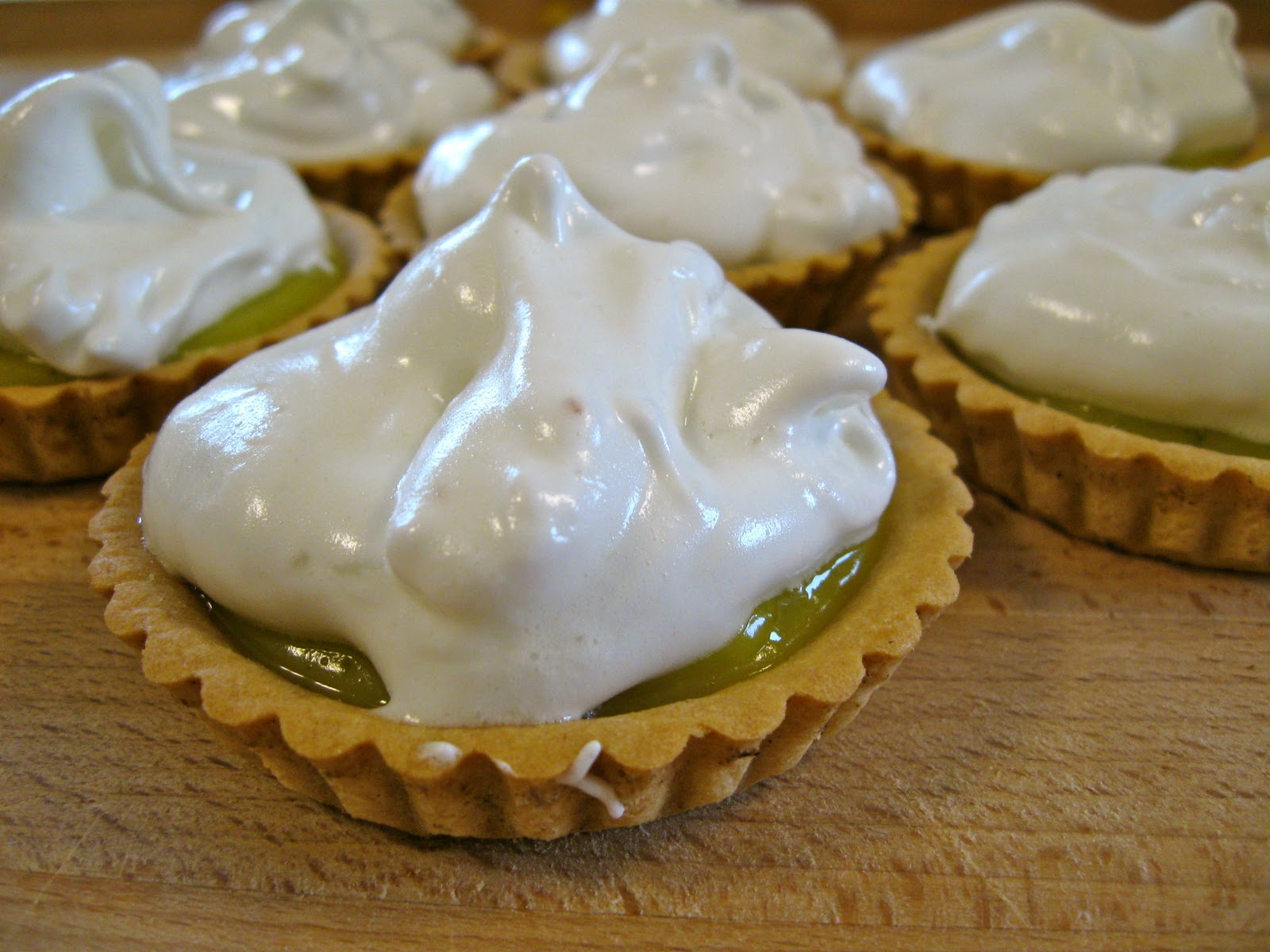
Tartelettes au Citron Meringué


Seda kooki sain ma esimest korda, kui poes oli osta 3, maksa kahe eest kampaania. Siis sai koju toodud suurel hulgal Bonne Maman magustoite, mille hulgas oli ka seesamune. Kuigi kõik nende tooted on kiiduväärt, hämmastab mind, et Bonne Maman on suutnud väga maitsva fabrikaadi teha. Isegi nii hea, et tegib huvi ise järgi teha. Ja siit algas üks lõppmatu katsetuste rada.

Esimesel korral hüübis sidruni-munakreem mul kuumutades ära. Ja ega teda väga palju ei olnud ka, ütleks, et umbes neljandik vaja minevast kogusest. See-eest oli põhi perfektne, piisavalt krõbe ja mitte liiga magus. Siin ka pilt:


Teisel korral, kui ma otsustasin hoopis teise resepti järgi teha, oli kõik peale põhja super. Selline peaaegu krõmpsuv, kuid siiski pehme oli. Ei saanud arugi, kas ta tahtis kõva või pehme olla. See-eest oli täidist väga palju lihtsam teha, kui esimesel korral. Praktiliselt lollikindel.


Kolmandal korral otsustasin tartelette ehk individuaalaseid koogikesi teha. Esiteks ei olnud võimalik seda tainast rullida, kuna ta oli võimatult mure, niiet surusin selle sõrmede abil vormidesse. Lisan, et üheksat vormi täitsin ma tund aega, kuna tainas ei kleepunud üldse. Pildil on näha, milline lõpptulemus oli.

Seega otsustasin, et on õige aeg, järjekordselt, fabrikaatide poole pöörduda. Nende täitmiseks kasutasin ma sama sidrunikreemi retsepti, mida teisel katsetusel.


Täidise ja katte retsept on siin. Lisan, et ühe suure sidruni all on mõeldud selle koort ja mahla. Soovitan kindlasti sidruni lisamise ajal ja peale lisamist maitsta, kas on veel vaja juurde panna või mitte. Mina aga kasutasin kahte laimi ja veel kolmanda mahla. Saadud kreemiga täitsin ma 5 väikest korvikest. Kes aga tahab teha ühte suurt kooki, sellel soovitan teha järgmise põhja, mis on pärit siit. Samast tainast peaks saama ka väikestele koogikestele põhjad teha. Kirjutan siis välja ka:

Põhi:
100 grammi võid
2 dl jahu
3 supilusikatäit suhkrut
näpuotsatäis soola

Sega kõik ained kokku. Lisa vajadusel veel jahu. Suru tainas lahtikäiva koogivormi (26 cm) põhja ja äärtesse, tee sellesse kahvliga mõned augud. Küpseta 160 kraadises ahjus mitte rohkem kui kümme minutit. 

Täidis:
2 munakollast
1 dl suhkrut
2 sl tärklist
2 dl vett
25 g võid
ühe suure sidruni (või 2-3 laimi) koor ja mahl

Sega kõik ained, peale sidruni, potis. Keskmisel kuumusel kuumutades ja vispliga pidevalt segades lisa sidruni koor ja mahl, enne kõige lisamist proovi, et liiga hapuks ei läheks. Kuumuta kuni täidis on paksenenud. Vala täidis vormi.

Kate:
2 munavalget
5 sl suhkrut
Vahusta munad suhkruga ja kata täidis munavahuga. Küpseta 140 kraadi juures 25 minutit. 


I fell in love with this Lemon Meringue cake thanks to Bonne Maman, whose Tartelettes au Citron Meringué are addictive. However, the problem is that they don't sell them all the time and the other companies' ones taste quite bad. Therefore, I was driven to make them myself. And this is where my series of failures started.

The first time, the yolk-lemon filling coagulated when I was preheating it. Maybe due to this, the amount of filling was about a fourth of what it should have been.

The second time, I decided to try a totally different recipe. The filling was foolproof, however, the base wasn't crispy nor was it soft so it didn't taste as nice as the first time.

The third time, I wanted to make tartlets instead of one big cake. First off, it was impossible to rool the pastry like the recipe suggested. Therefore, I simply pushed the pastry into the cups. This took me an entire hour (!) as the pastry didn't stick together at all. In the end it turned out a mess so I decided to buy some tartlets from the supermarket.


I made 5 tartlets with one cake's filling and topping. Here is the recipe:
The base is from here.

Pastry base:
100 grams butter
2 decilitres flour
3 tablespoons sugar
a pinch of salt

Mix everything together and add more flour if needed. Cover the base of a greased round springform cake tin (26 cm, removable bottom) with the pastry dough and make a few holes with a fork. Bake for less than 10 min in a 160 degree oven.

Lemon filling:
2 egg yolks
1 dl of sugar
2 spoonfuls of starch
2 dl of water
25 g of butter
juice and peel of one lemon (or 2-3 limes)

Mix all the ingredients, except the lemon, in a saucepan. While heating and whisking add the peel and juice of the lemon. Before adding the last bit of the lemon taste to make sure it isn't getting too sour. Pour on top of the base.
Whisk the two together and spread on top of the lemon filling. Bake at 140 degrees for 25 minutes.

Suitsulõhebliinid / Smoked Salmon Blinis


Neid suitsulõhebliine tegin vabariigi aastapäeva puhul eelroaks. Mitte just kodumaine toit, kuid väga head on nad küll ja imelihtsad teha. Kuigi ma olen paadunud pool-fabrikaatide vihkaja, tarbin ma neid siiski vahel harva olude sunnil. Kuna kogu õhtusöök oli minu õlgadele paisatud, lasin need mini pannkoogid emal poest osta. Maitsavad said nad sellegipoolest.

Vaja läheb:
32 bliini
150 g suitsulõhet
250 g maitsestamata jogurtit või hapukoort
peotäis tilli (kasutan endiselt kuivatatut)
supilusikatäis majoneesi
1-2 tl sinepit
poole sidruni mahl

Küpseta või osta bliinid. (Minu omade diameeter oli umbes 6 sentimeetrit. Tavaliselt peab isegi ostetud bliine enne soendama.) Sega hakitud till, supilusikatäis sidruni mahla, sinep ja majonees maitsestamata jogurti või hapukoorega. Aseta igale bliinile kuhjaga teelusikatäis jogurtisegu ja tükk lõhet. Pigista lõhele peale veel paar tilka sidrunit ja riputa kaunistuseks veel tilli ja soovi korral ka aniisiseemneid või kappareid.


I made these salmon blinis as an entrée for a dinner in the honour of the Estonian Independence day. They have always been a great hit and were so today as well. People tend to think that this kind of finger foods take ages to make but these certainly don't, especially when you buy the blinis, as I did. I absolutely hate ready-made foods and try to avoid eating such things, however, I didn't want to spend too much time messing about with them as I was making the whole dinner by myself and therefore let my mother buy these.

You'll need:
32 mini-blinis
150 g smoked salmon
250 g natural yoghurt or sour cream
a handful of dill
tablespoonful of mayonnaise
1-2 teaspoonfuls of mustard
juice of one lemon

Make or buy the blinis. (Mine were about 6 cm in diameter and usually you have to preheat even store-bought blinis.) Mix the chopped till, a tablespoonful of lemon juice, the mustard and the mayonnaise with the yoghurt. Put a big teaspoonful of the sauce on each blini, cover with a slice of salmon. Sprinkle some lemon juice and dill on top of each blini. You may also add anise seeds or capers.