Showing posts with label Dough. Show all posts

Tuesday, 19 July 2011

Pestoga sarvesaiad / Pesto Croissants


Kergetele ja tervislikele saiadele lisab vunki nõgesepesto, mille võib ka asendada mõne muu meelepärasega. Sobivad ideaalselt nii supi kui ka salati kõrvale või tomati ja mozzarellaga hommikusöögiks.

Vaja läheb:
100 g nisujahu
140 g täistera rukkijahu
100 g riivitud juustu (kasutasin lahjat)
2 tl küpsetuspulbrit
0,5 tl meresoola
50 g pehmet võid
200 g hapukoort


Täidis:
100 g riivjuustu
paar kuhjaga supilusikatäit pestot


Peale:
pestot
köömneid


Sega jahud, riivjuust, küpsetuspulber ning meresool. Näpi juurde pehme või, lisa hapukoor ja sega ühtlaseks. Rulli tainas kergelt jahusel pinnal õhukeseks rattaks, määri peale nii palju pestot, et tainas oleks ühtlaselt heleroheline. Lõika ketas kaheteistkümneks sektoriks ja riputa peale riivjuust nii, et seda oleks rohkem sektorite laiemas osas. Suru juust õrnalt taina sisse. Keera sektorid rulli, alustades laiemast otsast. Tõsta saiad küpsetuspaberiga keatud ahjuplaadile ning määri üle pestoga. Riputa peale ka köömneid. Küpseta 225 kraadi juures umbes 20 minutit.

Aet märgib oma blogis, et Tupperware rullimisaluse keskel olev ring on just nii suur kui see tainas tuleks rullida.

Allikas: Aet köögis, mugandatud.

Kõik peale viimase pildi tegi Kleer.


Stinging nettle pesto gives these healthy croissants a twist but any pesto will do. They are great with light salads and soups or with tomato and mozzarella for breakfast. The whole grain rye flour can be substituted for all-purpose or whole wheat flour.

You'll need:
100 g all-purpose flour
140 g whole grain rye flour
100 g grated cheese (I used light)
2 tsp baking powder
0,5 tsp (sea) salt
50 g butter, at room temp
200 g sour cream or 10-20% crème fraiche


Filling:
100 g grated cheese
a few tablespoonfuls of pesto


Topping:
pesto
cumin seeds


Sift together the flours, grated cheese, baking powder and salt. With your fingers rub in the soft butter and stir in the sour cream or crème fraiche until combined. Roll the dough out into a thin circle, brush with some pesto to get an even light-green pastry. Cut the pastry into 12 sectors and cover with the cheese. Make sure to place more grated cheese on the wider edges of the sectors than the rest. Gently press some of the cheese into the pastry and, starting from the wider edges, roll the sectors into rolls. Place the croissants on a prepared baking sheet and brush with pesto, top with some cumin seeds. Bake at 225 for about 20 minutes.

Modified from Aet köögis.


All but the last picture were taken by Kleer.


Sunday, 29 May 2011

Tartelettes aux Fraises


Tartelettes aux Fraises ehk maasikakoogikesed on üks Prantsuse klassika. Need muretaignakorvikesed on täidetud paksu crème Anglaise'iga ja kaetud maasikatega. Nii lihtne see ongi! Kuid maitse on suurepärane.

----------------------------------------------------------------------------------------------------------------------------

Tartelettes aux Fraises are a true French classic. The pate sablée bases are filled with thick crème Anglaise and covered with strawberreis. And that's how easy it is! But the taste is delish.

Tuesday, 17 May 2011

Mandlicroissantid / Almond Croissants

Nagu Prantsusmaalgi müüakse croissante siin kõikides kohvikutes ja pagariärides ning neisse pannakse igasuguseid suussulavaid täidiseid. Hommikul tuuakse meile kooli veoautoga üüratu hunnik värskeid saiakesi, mille järgi siis kogu kool lõhnab. Ja juba paari tunni pärast on kogu see saiakeste mägi kui õhku haihtunud. Ausõna, kes saiakest tahab peab lõuna alguses kohvikusse jooksma! Üks croissant'idest, mis sisaldab šokolaadi ja mandleid on aga eriti hea ja seda ei müüda mitte kuskil mujal. Paar päeva tagasi arutasime sõbrannaga, et neid saiakesi hakkame me küll tagaigatsema. Seega otsustasin haarata ohjad ja proovida teha midagi veel paremat. Ja õnnestus!

----------------------------

Just like in France, they sell croissants in every shop, caffee and bakery here. And the different fillings they put into them are just delicious. A lorry full of fresh pastries brings lunch to our school every morning, making the whole building smell luscious. Only a few hours later the whole pile of pastries has varnished. You really have to rush to get any! My favourite, a croissant they sell, contains chocolate and almonds. Just a few days ago a friend and I were discussing how the fresh pastries really are something we are going to miss about this school. So I decided to take matters into my own hands and try to make something even better. And I believe I did quite well.

Thursday, 28 April 2011

Filotaigna-õuna saiakesed / Phyllo Dough Apple Turnovers


Enne USAsse sõitu oli külmkapis järgi pakk filotainast ja mõned õunad, millel ma ei tahtnud äraolekul roiskuda lasta, niiet otsisin välja nendest kahest koosneva retsepti ja panin põidlad pihku, et tuleb hea. Ja tuli! Lausa nii hea, et me sõime need otse ahjust võetuna paljalt ära, vaevu jõudsin taldrikule tõsta, enne kui kõik otsas olid. Siiski proovisime ka vanillejäätisega ja see, õuna-jäätise kominatsioon ei vea kunagi alt.

--------------------------------------------------------------------------------------------------------------------------------

Before our trip to the USA I had some leftover phyllo dough and apples that I didn't want to let rot while away. So I looked up a recipe that called for both of these and hoped for the best. And it was delicious! They were so good we ate them straight from the oven. However, I did try them with vanilla ice cream and this vanilla-apple combination never lets me down.

Sunday, 27 March 2011

Tarte Fine de Pomme


Tarte Fine de Pomme ehk õhuke lehtaina-õunakook on just see magustoit, mida süües kukuvad inimesed hooplema, et nad suudaks selle kõik üksinda ära süüa, kui ainult süümepiinu ei tekiks. Iga kord, kui ma seda kooki söön ja teen, ma imestan, et kuidas saab üks nii hea asi nii lihtne teha olla. Just selle pärast on mul alati külmkapis üks rull lehttainast varuks. Kui magusa või kokkamise isu tekib, saab see rahuldatud just selle koogiga.
Mina sellele koogile kunagi suhkrut ei pane, kuna söön seda alati millegi magusaga, nagu näiteks jäätis. Kuigi ahjukuumalt, külma vaniljekastmega ehk crème anglaise'iga, oli kook parim.


Vaja läheb:
1 rull lehttainast (mina kasutan ümmargust, viimane kaalus 230 g)
2 suurt õuna
1 muna
spl piima
kaneeli
(suhkrut)

Pane ahi 220 kraadi peale sooja. Koori ja lõika õunad õhukesteks viiludeks. Rulli lahti tainas ja, jättes äärtesse umbes 1 cm ruumi, aseta õunatükid tainale, nii et nad veidi kattuvad. Klopi lahti muna ja pintselda ainult õunad sellega üle, ääred pintselda piimaga. Riputa peale kaneel ja soovi korral ka suhkur. Küpseta 30-40 minutit. Serveeri jäätise või crème anglaise'iga.


A lot of people say they could eat the whole cake all by themselves if they didn't feel guilty afterwards. Every time I make and eat this cake, I am amazed by how easy it is to make something so good. This is why I always have a pack of puff pastry in the fridge for when I feel the need to cook or eat something sweet. I never add sugar to it, as I always eat it with something sweet such as ice cream or crème anglaise, and apples are quite sweet by themselves anyways.


You'll need:
1 roll of puff-pastry (I use round ones, the previous one weighted 230 g)

2 apples (average, store bought size)
1 egg
tbsp of milk
cinnamon
(sugar)

Preheat the oven to 220 degrees. Peel and cut the apples into thin slices. Roll out the pastry and, leaving about 1 cm empty on the edges, place the apple slices on it so that they cover each other slightly. Whisk the egg and spread it only on the apples. Use the milk to spread on the pastry edges. Sprinkle on the cinnamon (and sugar) and place in the oven for 30-40 minutes. Serve hot with vanilla ice cream or cold crème anglaise.

Friday, 25 March 2011

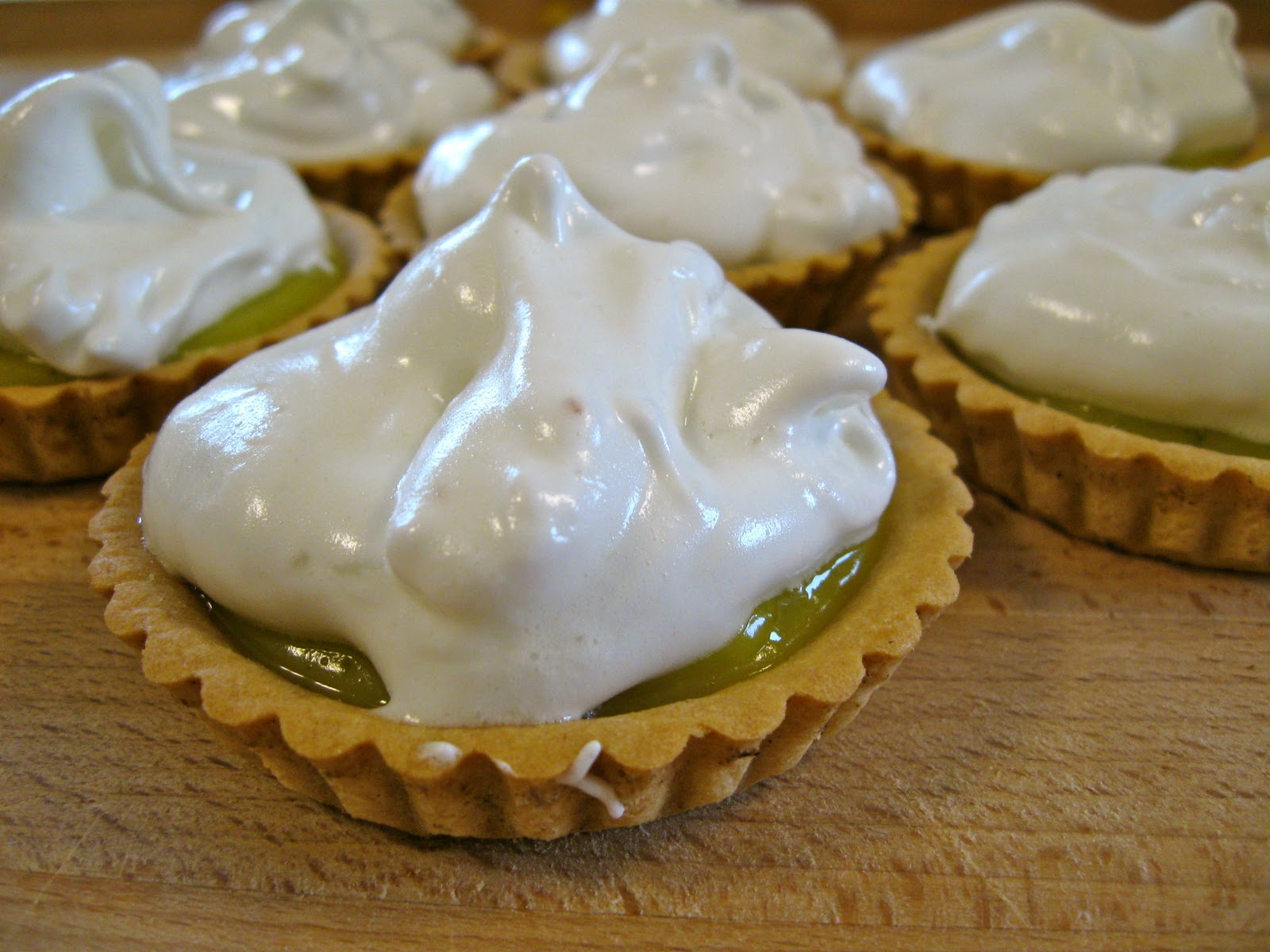
Rabarbri-beseekorvikesed / Rhubarb- Meringue Tartlets

Selle hooaja esimese rabarbrikoogi tegin ma tegelikult juba ammu ära. Enam pole mul õrna aimugi, kust need rabarbrid pärit olid, kuid tosca kook sai väga hea. See-eest mäletan ma väga täpselt, et need maksid 7 eurot kilo! Kahjuks ma seda kooki üles ei pildistanud nii, et sellest räägime kunagi hiljem edasi.

Kuigi rabarbri-hooaeg on veel kauges tulevikus olen ma juba päris mitu kooki sellega teinud ja seda tänu poes müüdavale külmutatud rabarbrile. Kunagi suhtusin ma külmutatud puu-ja juurviljadesse skeptiliselt, kuid tuleb välja, et need on vitamiinirohkemad kui kuskilt teisest maailma otsast kohale loksunud "värsked tooted". Seda selle pärast, et kuskil Lõuna-Ameerikas kasvatatud viljad korjatakse ammu enne valmimst ära, et nad pahaks ei läheks ja nii nad siis "küpsevad" transportides, samal ajal kui nad oma maitset, värvi ja vitamiine, mida neil juba algusest peale tegelikult ei olnud, kaotavad. Külmutatud marjad, aga korjatakse ära just siis kui nad valmis on ja külmutatakse kohe, seega säilitavad need tooted oma värskuse, kui nii öelda saab. Ja neid transporditakse oluliselt vähem, mis säästab ka loodust. Kuid otseloomulikult on kodumaine toit ikka hulka parem kui mistahes külmutatud versioon. Siiski, Saksamaalt toodud on usaldusväärsem, kui teiselt poolt maakera, eriti kui sa elad kõigest mõnikümmend kilomeetrit üle piiri.


Ah, ja seda ka, et hapukad koogikesed läksid vabariigi aastapäeval külalistele peale nagu soojad saiad.

Tegelikult lubasin ma endale nii pikka pläkutamist tänu sellele, et retsepti leidsin ma siit. Seega ei pea ma seda ümber kirjutama. Mina kasutasin neid samu fabrikaat-korvikesi (mida mul kulus selle koguse peale 7), mida eelmises retseptiski nii, et koogikesed valmisid hõlpsasti. Kel aga soovi need ise meisterdada siis järgmine retsept, millega tegin ka sidrunikoogikestele põhja, peaks sobima.

Põhi:
100 grammi võid
2 dl jahu
3 supilusikatäit suhkrut
näpuotsatäis soola

Sega kõik ained kokku. Lisa vajadusel veel jahu. Suru tainas lahtikäiva koogivormi (26 cm) või muffinivormide põhja ja äärtesse, tee sellesse kahvliga mõned augud. Küpseta 160 kraadises ahjus mitte rohkem kui kümme minutit.


Just like the previous desserts, I made these sour rhubarb tartlets for the Estonian independence day. The rhubarb season is just starting and the prices are still ridiculously high - 6 euro a kilogram(!) compared to the 7 about two months ago. However, I noticed some cut up frozen ones in the supermarket and only had to mention them to my mother when they miraculously appeared in the deep fridge.

And a short lecture on why deep frozen is better than what you'll find in the "fresh" fruit area. A lot of the "fresh" fruit and vegetables are grown south of the equator as it stays warm there for longer than here, in Europe. However, to save them from going off during transportation they are picked way before they are ready as they are supposed to ripen while being transported. They are also covered with various things like wax to keep them from going off. This is why all the bananas sold here are absolutely green when they arrive. However, while transported the fruit loose their taste, smell, colour and vitamins, that they anyways lacked at first place.
On the other hand, the frozen fruit you can buy here, is usually grown in Europe. As it doesn't have to be transported for thousands of kilometers  it can be picked when ripe and frozen right away. This way the taste, colour, smell and vitamins are preserved and the amount of money spent on transport is reduced, making the prices of these goods considerably smaller (the frozen rhubarb was half the price). However, if given the opportunity to buy fresh local foods then they are better than anything frozen.

These tartlets were easy to make and the guests liked them, even though not as much as the lemon ones, so they were a success.

I used the same store bought tartlets as in the previous recipe, however, if you want to make your own, the pastry used in the lemon meringues should do.


Pastry base:
100 grams butter
2 decilitres flour
3 tablespoons sugar
a pinch of salt

Mix everything together and add more flour if needed. Cover the base of a greased round springform cake tin (26 cm, removable bottom) with the pastry dough and make a few holes with a fork. Bake for less than 10 min in a 160 degree oven.

For the filling you'll need:
300 g of chopped rhubarb
150 g of chopped strawberries
80 g of sugar
3 spoonfuls of amaretto

1 egg white
3 spoonfuls of sugar
almond slices

Mix the chopped rhubarb, strawberries, sugar and amaretto in a saucepan and heat at a low temperature for 10 minutes. To save the structure of the fruits, don't stir a lot. Pour out the liquid (I didn't have anything to pour out though), you can use it as sirup and mix it with water for some "juice". Divide the jam between you tartlets (I got 7).

For the meringue whisk the egg white with the sugar and place on top of the rhubarb jam. Sprinkle some almond slices on top and bake at 180 degrees for 10 minutes.


Source: Siit nurgast ja sealt nurgast.


Tartelettes au Citron Meringué


Seda kooki sain ma esimest korda, kui poes oli osta 3, maksa kahe eest kampaania. Siis sai koju toodud suurel hulgal Bonne Maman magustoite, mille hulgas oli ka seesamune. Kuigi kõik nende tooted on kiiduväärt, hämmastab mind, et Bonne Maman on suutnud väga maitsva fabrikaadi teha. Isegi nii hea, et tegib huvi ise järgi teha. Ja siit algas üks lõppmatu katsetuste rada.

Esimesel korral hüübis sidruni-munakreem mul kuumutades ära. Ja ega teda väga palju ei olnud ka, ütleks, et umbes neljandik vaja minevast kogusest. See-eest oli põhi perfektne, piisavalt krõbe ja mitte liiga magus. Siin ka pilt:


Teisel korral, kui ma otsustasin hoopis teise resepti järgi teha, oli kõik peale põhja super. Selline peaaegu krõmpsuv, kuid siiski pehme oli. Ei saanud arugi, kas ta tahtis kõva või pehme olla. See-eest oli täidist väga palju lihtsam teha, kui esimesel korral. Praktiliselt lollikindel.


Kolmandal korral otsustasin tartelette ehk individuaalaseid koogikesi teha. Esiteks ei olnud võimalik seda tainast rullida, kuna ta oli võimatult mure, niiet surusin selle sõrmede abil vormidesse. Lisan, et üheksat vormi täitsin ma tund aega, kuna tainas ei kleepunud üldse. Pildil on näha, milline lõpptulemus oli.

Seega otsustasin, et on õige aeg, järjekordselt, fabrikaatide poole pöörduda. Nende täitmiseks kasutasin ma sama sidrunikreemi retsepti, mida teisel katsetusel.


Täidise ja katte retsept on siin. Lisan, et ühe suure sidruni all on mõeldud selle koort ja mahla. Soovitan kindlasti sidruni lisamise ajal ja peale lisamist maitsta, kas on veel vaja juurde panna või mitte. Mina aga kasutasin kahte laimi ja veel kolmanda mahla. Saadud kreemiga täitsin ma 5 väikest korvikest. Kes aga tahab teha ühte suurt kooki, sellel soovitan teha järgmise põhja, mis on pärit siit. Samast tainast peaks saama ka väikestele koogikestele põhjad teha. Kirjutan siis välja ka:

Põhi:
100 grammi võid
2 dl jahu
3 supilusikatäit suhkrut
näpuotsatäis soola

Sega kõik ained kokku. Lisa vajadusel veel jahu. Suru tainas lahtikäiva koogivormi (26 cm) põhja ja äärtesse, tee sellesse kahvliga mõned augud. Küpseta 160 kraadises ahjus mitte rohkem kui kümme minutit. 

Täidis:
2 munakollast
1 dl suhkrut
2 sl tärklist
2 dl vett
25 g võid
ühe suure sidruni (või 2-3 laimi) koor ja mahl

Sega kõik ained, peale sidruni, potis. Keskmisel kuumusel kuumutades ja vispliga pidevalt segades lisa sidruni koor ja mahl, enne kõige lisamist proovi, et liiga hapuks ei läheks. Kuumuta kuni täidis on paksenenud. Vala täidis vormi.

Kate:
2 munavalget
5 sl suhkrut
Vahusta munad suhkruga ja kata täidis munavahuga. Küpseta 140 kraadi juures 25 minutit. 


I fell in love with this Lemon Meringue cake thanks to Bonne Maman, whose Tartelettes au Citron Meringué are addictive. However, the problem is that they don't sell them all the time and the other companies' ones taste quite bad. Therefore, I was driven to make them myself. And this is where my series of failures started.

The first time, the yolk-lemon filling coagulated when I was preheating it. Maybe due to this, the amount of filling was about a fourth of what it should have been.

The second time, I decided to try a totally different recipe. The filling was foolproof, however, the base wasn't crispy nor was it soft so it didn't taste as nice as the first time.

The third time, I wanted to make tartlets instead of one big cake. First off, it was impossible to rool the pastry like the recipe suggested. Therefore, I simply pushed the pastry into the cups. This took me an entire hour (!) as the pastry didn't stick together at all. In the end it turned out a mess so I decided to buy some tartlets from the supermarket.


I made 5 tartlets with one cake's filling and topping. Here is the recipe:
The base is from here.

Pastry base:
100 grams butter
2 decilitres flour
3 tablespoons sugar
a pinch of salt

Mix everything together and add more flour if needed. Cover the base of a greased round springform cake tin (26 cm, removable bottom) with the pastry dough and make a few holes with a fork. Bake for less than 10 min in a 160 degree oven.

Lemon filling:
2 egg yolks
1 dl of sugar
2 spoonfuls of starch
2 dl of water
25 g of butter
juice and peel of one lemon (or 2-3 limes)

Mix all the ingredients, except the lemon, in a saucepan. While heating and whisking add the peel and juice of the lemon. Before adding the last bit of the lemon taste to make sure it isn't getting too sour. Pour on top of the base.
Whisk the two together and spread on top of the lemon filling. Bake at 140 degrees for 25 minutes.

Kaneelipulgad / Cinnamon sticks


Nagu juustupulkade puhul, tegin need kaneelipulgad emale tööle kaasa. Jällegi, nad on mõnusalt krõbedad, kuid see kord magusad. Maitse on neil väga hea ja lihtne on neid teha ka.

Vaja läheb:
lehttainast
võid
kaneeli
suhkrut

Katte jaoks:
2 spl tuhksuhkrut
1 tl piima

Keera ahi 190 kraadi peale sooja. Kata ahjuplaat küpsetuspaberiga. Määri lehttainas sulatatud võiga, riputa peale suhkrut ja kaneeli. Lõika tainas 1 cm laiusteks ribadeks ja keera need mõlemast otsast kinni hoides rulli. Aseta ahjuplaadile, jättes iga pulga vahele 2-3 sentimeetrit. Küpseta ahjus 10-12 minutit.

Samal ajal sulata väikses potis tuhkruhkur piimaga. Lõpptulemus võiks olla joogijogurti paksune. Nirista suhkrutmöginat pulkadele peale, kuid ära kata neid täielikult, muidu tuleb liiga magus. Lase jahtuda.


---------------------------------------------------------------------------------------------------------------------------------


Just like the cheese sticks, I made these for my mum to take to work. These taste yummy and are nice and crispy but this time sweet. And I can't think of anything easier and faster to make.

You'll need:
puff pastry
cinnamon
sugar
butter

Topping:
2 spoonfuls of powdered sugar
1 teaspoonful of milk

Turn the oven to 190 degrees, cover an oven-pan with baking paper. Roll out the pastry and using a cooking brush cover with melted butter just until it's shiny all over. Sprinkle cinnamon and sugar on top. Cut the pastry to strips and holding onto each end spin a few times. Place the sticks on the oven-pan 2-3 cm apart from each other. Repeat with each strip and when the pan is full bake it in the oven for 10-12 minutes.

Meanwhile, make the topping by heating the powdered sugar with the milk in a small saucepan. The end result should be a sticky liquid. With a small spoon spread it on the stick, but don't cover entirely as they will turn out too sweet. Let cool and munch away.


Juustupulgad / Cheese sticks

Selliseid juustupulki tegin ma oma emale ametnikuks saamise puhul töölkaaslastele pakkumiseks. Algul mõtlesin teha muffineid, kuid kui ta ütles, et neid on kokku 25 siis pidin midagi kiiremat ja lihtsamat välja mõtlema. Sarnaseid pulgakesi pakkus mu isa eelmisel suvel oma esimeselt kultuuriüritusel mõisas. Tema, aga tellis need ühelt tuttavalt. Järgmine kord saan need ise teha. Kui aus olla siis muutsin retsepti natuke veel peale seda kui ema neid tööle viis, niiet nüüd on nad veel paremad - mõnusalt krõbedad, juustused ja pestosed. Ja väga lihtsad teha. Minu meelest sobivad ideaalselt telekat vaadates näksimiseks või suurele hulgale külalistele eelroaks.


Vaja läheb:
lehttainast (mina kasutasin umbes 15x15 ruudukujulisi lehti, mis ma poest ostsin)
punast või rohelist pestot
juustu (kasutasin parmesani ja cheddar'it )

Pane ahi 190 kraadi juurde sooja ja kata ahjuplaat küpsetuspaberiga. Rulli lehttainas lahti, kui ta väga pikk/lai on siis lõika lühemaks, muidu lähevad pulgad keerates katki. Pintselda kogu leht pestoga üle. Väga paksult pole vaja, aga leht võiks ikka üleni roheline/punane olla. Riputa peale juust, jällegi mitte väga paksult, kuna muidu kukub see keerates pealt ära. Suru sõrmedega juust õrnalt taina sisse, võid seda ka teha õrnalt jahuse tainarulliga. Lõika leht pitsanoaga sentimeetri paksusteks ribadeks. Hoia mõlemast otsast kinni ja keera read rulli. Aseta ahjuplaadile kahe-kolmesentimeetriste vahedega. Küpseta ahjus 10-12 minutit.


---------------------------------------------------------------------------------------------------------------------------------


I made these cheese sticks for my mother to offer to her colleges at a party in her honour, as she got a permanent contract. There were quite a lot of them - 25, so I needed something quick but tasty. And these were perfect. They are crispy, salty and cheesey and there is a hint of pesto to them. Yum, the second time I made them we almost fought over the last one.


You'll need:
puff pastry sheets (mine were 15x15 cm)
red or green pesto
cheese (I used parmesan and cheddar)

Turn the oven to 190 degrees and cover an oven-pan with cooking paper. Roll out the puff pastry. If it's very long then cut it shorter, as the sticks may break when spinning. Using a cooking brush cover the sheet with pesto. It should be green all over but not thickly. Then sprinkle the cheese over it, again all over but not too thick as, it will just fall off when spinning. Now softly press the cheese into the pastry, you may also use a rolling pin for this. With a pizza knife cut the pastry into 1 cm wide strips. Holding onto both sides spin each stick and place on the oven-pan 2-3 cm apart from each other. When the pan is full place to the oven for 10-12.